Friday, June 23, 2017

Ecological Forecasting: Reevaluating Ecology in the Face of Climate Change

The Science of Ecological Forecasting
The field of ecology is approaching new horizons through the work and innovation done at the Dietze research group here at Boston University. The development of computational and statistical models, built with analyzing vast amounts of ecological data in mind, has recast the ecological sciences as a predictive, informative endeavor, particularly in the face of climate change and its dynamic effects on ecosystems and biological systems.

The Internship
This summer internship dives right into the process of developing and implementing ecological models through computer programming languages. I joined this internship on the basis of my experience in mathematics, computing, and the biological sciences. I enrolled in BI 303: Evolutionary Ecology as well as MA 226: Differential Equations this past Spring semester, and the interdisciplinary connections between the two classes were obvious and manifold. Dynamical mathematical models are abundantly used in ecological and biological contexts to make predictions and establish theories about ecological systems. Last Fall semester I enrolled in CS 111: Introduction to Computer Science I, where I was introduced to the Python coding language. All of these experiences have inadvertently helped prepare me for the work in the internship. In the development of computational ecological models, the Dietze lab uses the statistical computing language of R, in addition to many others. Seeking to broaden my knowledge of coding languages, and given my classroom experience, this opportunity seemed a natural fit.

As you would expect, a typical day in the lab is dedicated to coding, using the software version control platform of GitHub. Many other software components are used in developing the various ecological analyzers. One such project has been PEcAn.


Picture 1. Associate Professor Mike Dietze of the Earth and Environment Department delivers a seminar on the "emerging imperative" of ecological forecasting, which seeks to synthesize vast amounts of existing ecological data into coherent, analytical, statistical forms that can then be used to make predictions (21 June 2017).

The PEcAn Project

A large project of the Dietze lab has been PEcAn, which stands for the "Predictive Ecosystem Analyzer". http://pecanproject.github.io

It's goals, as established by the lab, includes:

"Climate change science has witnessed an explosion in the amount and types of data that can be brought to bear on the potential responses of the terrestrial carbon cycle and biodiversity to global change. Many of the most pressing questions about global change are not necessarily limited by the need to collect new data as much as by our ability to synthesize existing data. This project specifically seeks to improve this ability. Because no one measurement provides a complete picture, multiple data sources must be integrated in a sensible manner. Process-based models represent an ideal framework for integrating these data streams because they represent multiple processes at different spatial and temporal scales in ways that capture our current understanding of the causal connections across scales and among data types. Three components are required to bridge this gap between the available data and the required level of understanding: 1) a state-of-the-art ecosystem model, 2) a workflow management system to handle the numerous streams of data, and 3) a data assimilation statistical framework in order to synthesize the data with the model."


Screenshot 1. A workflow log of various model runs on the PEcAn web interface.

Screenshot 2. A typical R Studio working environment within the PEcAn development process.


By: Elias Kastritis

Mathematics and Philosophy double major

Wednesday, June 21, 2017

Antarctica and Mars

Hi! My name is Noah Conley and I am a rising sophomore in the College of Arts and Sciences (CAS) double majoring in Astrophysics and Geophysics & Planetary Science. Unlike my coworkers in BURECS who work with ancient ash, crystals, or the workings of Earth, I research Mars. My goals for this summer are to expand on the surface feature inventory for Mars, to hone my GIS skills, and to learn more about Martian topography, as that may be helpful considering my majors.

Monday, June 19, 2017

BUARG Intern: Olivia Williams

Examining volcanic crystals in the SEM

My name is Olivia Williams, and I’m interning in the BU Antarctic Research lab this summer. I’m a rising sophomore in the College of Arts and Sciences. My majors are English and Earth & Environmental Sciences, with a focus in Earth & Climate.
This wasn’t always the path of study I had in mind for myself; when I first came to BU, I intended to study journalism. I thought that the BURECS program would be the perfect opportunity to hone my communication skills while learning more about the climate--an issue about which I have always been passionate. However, in the course of my first two semesters, I realized that I enjoy creative writing and literature much more than journalism. Meanwhile, BURECS connected me with my previously-undiscovered second love: scientific research.

Tuesday, May 2, 2017

Boston Collegiate Charter School at BU

In reflecting on our visit from Boston Collegiate Charter High School last week, one thing stands out above everything else: enthusiasm for science and inquiry. On the tails of our TeenSHARP visits in early April, BURECS, the BU Department of Earth and Environment, and the BU Office of Undergraduate Admissions partnered up to welcome nearly 100 ninth-grade students from Boston Collegiate Charter School (BCCS) to BU on April 28, 2017. 

Boston Collegiate Charter School is a public charter high school located in Boston’s Dorchester neighborhood; its primary objective is preparing students for college. In pursuit of this objective, BCCS follows an “academically rigorous college preparatory curriculum for students in grades five through twelve.” The majority of its students come underserved communities in the greater Boston area.

Below are some details (and pictures, of course!) of their visit to the BUARG:


During their visit, the students were divided into two smaller sub-groups for a campus tour with the office of admissions and visits to Earth and Environment research labs. Following the tours of campus and labs, the students were taken to a panel question-and-answer session with BU undergraduate students across science disciplines. At the conclusion of the panel, students were invited to an on-campus dining hall for an informal lunch with the panelists.

In the Antarctic Research Lab, students were first given an interactive presentation by Dr. Marchant on the methods of using ultra-high resolution imagery for remote fieldwork. Following his presentation, the students had the opportunity to take a virtual tour of the BUARG field sites in the McMurdo Dry Valleys using an Oculus Rift Virtual Reality headset and software designed by the BUARG.


In BUARG's chemical and optical analysis facility, students observed fossilized lake mosses and diatoms in hand sample, under optical microscopes, and using the lab’s scanning electron microscope (SEM). Fourth-year BUARG graduate student Andrew Christ provided the students with an overview of the procedures for collecting the samples in the field, as well as an introduction to terrestrial proxy records of Antarctic paleoclimate. In addition to Andrew’s discussions, undergraduate students in the BURECS program discussed their work as members of the BURECS cohort, and their activities in the lab. 

Andrew Christ shares about the scanning electron microscope.

BURECS student Carina Terry overviews fossil ash deposits with BCCS students.

Students left the visit with a thorough introduction to both the importance of undergraduate research within the BUARG, the overall BURECS program model, and the research of Antarctic geoscientists. The panel question-and-answer session also allowed for a broad range of questions--everything from dining hall food to study abroad options was discussed!


We're excited to see them back here next year! Thanks BCCS!

Are you and/or your students interested in visiting the BURECS lab? Send us an e-mail at burecscience at gmail dot com or ddennis at bu dot edu.


Monday, April 10, 2017

TeenSHARP Comes to Visit!

It has been a busy few weeks here in the BUARG lab -- we recently hosted two of the TeenSHARP program's chapters for visits to our lab and the larger Earth and Environment department. From their mission statement: “TeenSHARP […] gives low-income and minority youth access to premier leadership opportunities, trains them be ambassadors of higher education in their communities, and prepares them for success at selective colleges and universities.”

We had been planning for and looking forward to their visit for some time, and finally got to introduce the students to the lab! Here are some pictures and a write-up about their visit:


All the students who visited with TeenSHARP had the opportunity to visit the Antarctic Research Lab, meet with current students in the BURECS cohort, and discuss academic activities at BU with Dr. Marchant during the lab sessions. Many of them also visited the Digital Image Analysis facility within the Antarctic Research Lab, where they took a virtual tour of Antarctic field research sites, and received an overview of the BU Antarctic Research Group’s (BUARG) methods for remote fieldwork. 


Students then visited the main BUARG/BURECS lab where they observed mid-Miocene age fossilized mosses in hand sample and analyzed them under the lab’s scanning electron microscope (SEM). They similarly handled preserved volcanic ash using optical microscopes, and discussed BUARG’s procedures for sample collection in the field. Current students in the BURECS program were on hand to assist and discuss their work in the program.


The March 31 visit included a student panel following the lab sessions. The TeenSHARP students asked questions on a broad range of topics, from life as an undergraduate and the faculty-student mentoring relationship to living in Boston and the benefits of attending a university in a major research hub. The panel included both undergraduate and graduate students, including a current BURECS student, and was moderated by a senior student in the TeenSHARP program.


We hope to see you again soon, TeenSHARP!

Are you and/or your students interested in visiting the BURECS lab? Send us an e-mail at burecscience at gmail dot com or ddennis at bu dot edu.

Wednesday, January 11, 2017

One Year Later: Reflections on my time in Antarctica

One Year Later:
Reflections on my time in Antarctica

Winter has finally arrived in Boston. People are bundled up in parkas, winter hats, thick gloves, heavy boots, and scarves, as if they were in Antarctica, not Massachusetts. They complain about Boston’s cold and windy winter months, and I can’t help but laugh.
It has now been over a year since I went on my research expedition to Antarctica. And, while I am definitely enjoying a relaxing, mundane winter break at home, the anniversary of my extraordinary trip and the onset of winter in Boston have brought to mind memories, good and bad, of my time at the bottom of the world. I have finally had a chance to reflect on those unique experiences— experiences that have changed my life in ways both subtle and profound.

There are some things about Antarctica that I don’t miss. Some experiences are so uncomfortable that, despite being part of such a remarkable adventure, they can’t be remembered with even the slightest fondness. First of all, I sacrificed most comforts that the developed world takes for granted: shower, fresh food, running water, telephone, internet, toilet, and much more. Without these amenities, my weeks in the Dry Valleys were among the harshest that I have ever experienced. (On our first day back, although I was sad to be leaving our campsite, the relief of having access to a hot shower, a hot meal, plumbing, and a mattress was ineffable.)
And of course the Antarctic temperature was brutally frigid. Our struggle to stay warm never really ended, with temperatures ranging from unbearable to just sufferable. Life in general, and geological field work in particular, is very hard when you can’t feel your face, feet, or hands. I actually got a very minor case of frostbite on my right hand. The cold wasn’t just uncomfortable, but it actually posed a health risk.
Along with the obvious physical struggle of living in Antarctica came the less expected psychological struggle. It was the first year of my life that I wasn’t home for winter break. I missed Christmas, New Year's Day, birthdays, and a wedding. Some days, a powerful feeling of homesickness set in. I missed my family, friends, and neighbors, most of whom I hadn't seen for a year. Away from cell phone towers and internet access, I couldn’t even contact them remotely. After an extremely stressful semester, it would have been great to at least hear their voices. Missing them was one of the biggest sacrifices I had to make. And now that I am home, I can appreciate just how valuable my time with loved ones really is.

Friday, July 22, 2016

BURECS and the Subtle Art of Museum Education


BURECS and the Subtle Art of Museum Education


by Morgan O'Hanlon


museum room.JPG

An exhibit highlighting New England's forests at the Harvard Museum of Natural History.


bones.JPG
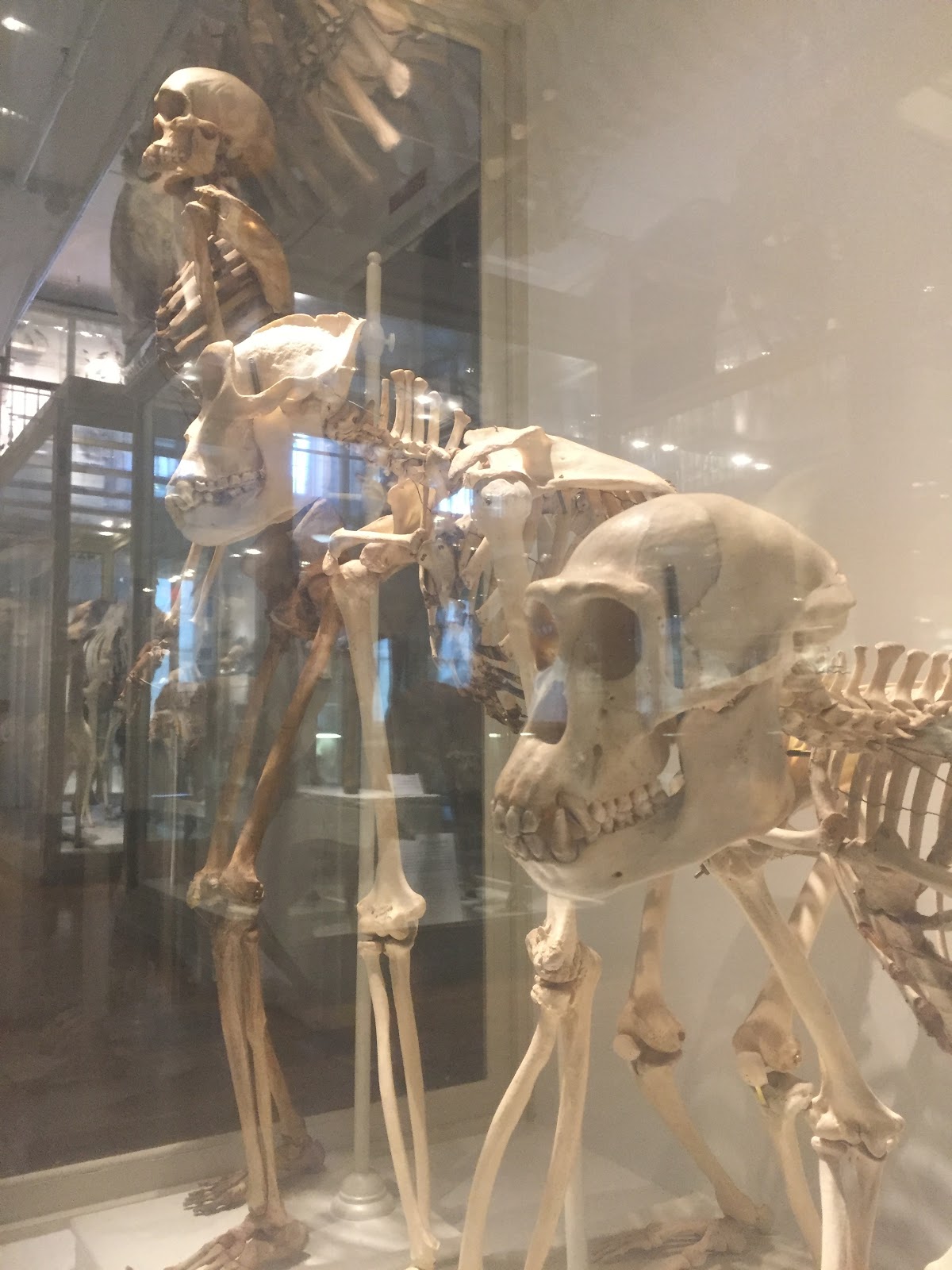
Skeletons in the Great Mammal Hall in the Harvard Museum of Natural History.

The roof of a large, red-bricked building pokes out front the top of a thick canopy only a few blocks away from famous Harvard Yard. Sunlight filters down through gaps in the leaves, glittering on the distinguished exterior. Students, teachers and other curious individuals file through the enormous front doors. Catherine Pereira, a summer intern here at the Harvard Museum of Natural History, met me outside and led me up into the museum. As this was my first time in the museum, I was immediately filled with awe when I lay my eyes upon the vast collection on display. The collection of stuffed mammals and birds and one room catch my attention with their glistening, glass eyes. In another room, display cases of artfully arranged, jaw-droppingly beautiful, jewel-colored insects. Within each room, every display told a different story. Each room had its own theme--one with skeletons and taxidermy of a vast collection of mammals and birds, another room showcased the incredible biodiversity of islands. Through each room I visited, I would stop to learn more whenever something caught my eye, taking a closer look and reading the description on succinctly written labels. I looked around and noticed other patrons doing the same, taking in information at their own speed.


Word map created by Catherine Pereira as part of her project to

survey patrons about their knowledge of Microbes, the subject

of an upcoming exhibit at the Harvard Museum of Natural History.


When I asked Pereira about how museums design their exhibits to create this experience, Pereira, a BURECS student majoring in biology education, explained a few of the projects she’s been working on. Currently, she’s surveying museum patrons in order to help the director of exhibitions create a new exhibit. This, she said, is part of a plan to gauge patron understanding of microbes so the exhibit staff has a better understanding of the public’s knowledge base. “The job of a teacher is to be able to explain concepts in an understandable, yet accurate way,” Pereira said. In the case of the microbes exhibition, Pereira discovered that patrons first think about microbes as small and dangerous causes of disease--a misconception. She said that museums are most effective at teaching when they consider these preconceptions and address them appropriately in the exhibition.


“[Teachers] also have to be able to re-explain concepts in different ways for students who don’t understand it the first time around,” she said. Unlike the classroom, museums are well-equipped to present concepts in many different ways. According to her, people can better learn when museums are designed in a way that allows patrons to be self-guided, thus creating an individualized learning experience. Pereira explained to me that this was the beauty of informal education, “visitors want to learn,” she said, “the job of an exhibit developer is to help visitors get what they want, but not force them to learn about anything they don’t want to learn.”


In order to promote this freeform learning inherent to the museum experience, a lot of thought goes into planning the exhibits so that the information is presented in a manner that doesn’t overwhelm museum visitors. “We want to allow people to make choices about their learning experience,” said Janis Sacco, the Director of Exhibitions for the Harvard Museums of Science and Culture. In order to do this, she said, “you want to make sure that your message is apparent in every single thing that you look at… it’s not just about content presentation, it’s also about mood presentation.”


dinobones.JPG
View from the second floor of the Great Mammal Hall in the Harvard
Museum of Natural History. The skeleton of a whale hangs from
the ceiling over the remains of giraffes, bears, and other mammals.
Throughout the museum, this philosophy is evident. In an exhibit showcasing the biodiversity of New England's forests, I picked up a handout titled “Look, Listen, Touch,” which explained the features of the room to engage the senses of visitors through the use of audio from the woodlands, three dimensional artifacts and interactive digital kiosks. The aim is to draw a visitor in by making them feel as if they’re actually out in the wilderness while subtly presenting them with further information about their experience.


Sacco’s ultimate goal is to inspire museum visitors to discuss what they learn in the exhibits, which the museum considers to be the highest level of engagement. “When we engage in conversation, we learn the most,” she said, “if we’ve gotten them to that point, that’s the pinnacle of what they can get out of the museum experience."

When it comes to science education in the classroom, Pereira thinks that teachers could help their students by utilizing some of the methods used by exhibit developers. “Working here has given me a whole new perspective on how to teach,” she said, “if I could get students in a science classroom to feel not like they’re learning, but just to feel like they’re having fun talking about or climate, plants, or whatever the unit is at the time, that would be the ultimate goal.”